
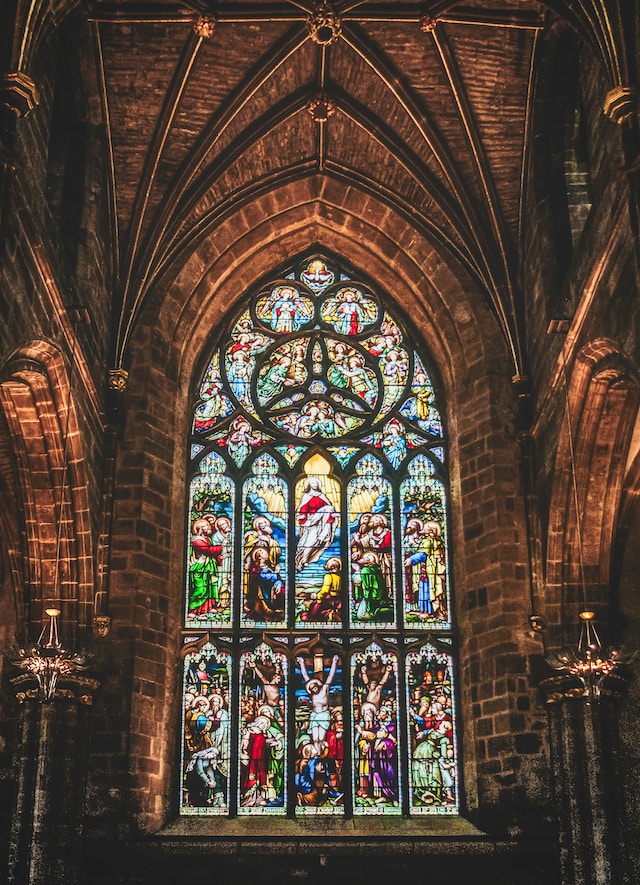
As with other mainstream churches, the Church of Scotland adheres to traditional Christian teachings about Jesus being Lord and accepting Scripture as divinely inspired literature. Holy Communion services allow members of its congregation to gather around tables for shared bread and wine communion services.

The Covenanters
Covenanters were a group of Scottish Presbyterians who signed the National Covenant in 1638 in opposition to Stuart monarchy’s interference in Church affairs, believing he wasn’t entitled to be at the head of Scotland’s Church of Scotland.
The kings believed they were endowed with divine rights from God to lead both Church and State; this proved intolerable to covenanters, leading to two short wars lasting only a year each, each leaving an unprecedented trail of deaths in its wake.
After World War I and II there was a period of severe repression. Ministers with Covenanting sympathies were removed from their churches and forced to hold meetings called conventicles in barns or private houses instead of traditional church settings. It was an extremely divisive time in Scottish history where both sides wanted revenge at any cost.
The Reformation
In Scotland during the sixteenth century, ideas from Renaissance humanism began to arrive and challenge aspects of established church while stimulating new concepts.
Catholic influence over the church was strong and Reformers worked to free their country of it.
Breakaway movements emerged which culminated in the Disruption in 1843, when over one third of ministers left their church. This caused further divisions to form within it which ultimately resulted in the formation of the Free Church of Scotland which still exists today though at a much reduced size.
Due to this split, the Church reassessed its relationship with the State and subsequently adopted Articles Declaratory as part of the 1921 Church of Scotland Act to confirm their ecumenical commitment and ensure continuity for future generations.
The Disruption
Throughout the 17th century, Presbyterian and Episcopalian movements competed to be established church in Scotland. With the Revolution Settlement of 1690 however, patronage was abolished allowing people to choose their pastors by voting.
Evangelical pastors supported by religious revivals and Sunday school movement sought greater autonomy for their church, leading to the Disruption of 1843 when 451 moderate pastors with their congregations left the Church of Scotland and founded their own Free Church of Scotland.
The Free Church has always opposed state establishment of religion as an impediment to its work and mission, maintaining strong commitments to Reformed tradition as well as One Holy Catholic and Apostolic church while also placing great importance on global partnerships.
The Relief Church
By the 1770s, church had reached an emotional lowpoint. Racked by religious disagreement and in danger of breaking away from its link to state authorities.
Relief Church was formed as an organization to break free of laird-controlled churches and increase congregational autonomy by permitting congregations to appoint their own minister and relaxing ties between Kirks and States.
This led to a great separation, commonly known as the Disruption. Relief Church eventually became part of what later became United Free Church of Scotland until 1900 when they merged with two other congregations to form United Presbyterian Church of Scotland; while Continuing Church of Scotland still retains Voluntary principles and mission work despite merging into UPC in 1929.
The Sovereign
Following in Stewarts’ footsteps, subsequent monarchs believed strongly in their divine right to rule both Church and State, trying to force episcopalism onto it but meeting resistance from Covenanters.
Patronage was a significant source of discontent among ministers that eventually led to the Disruption in 1843, when three-fourths resigned and formed their own religious organization – the Free Church of Scotland. Although a minority within the Church itself, they retained their own General Assembly and moderator until 1929.
In today’s increasingly secularized and compromised society, the Church strives to remain distinctive while remaining true to Scripture. She provides strength, security and peace for those who choose her as their faith-leader.

A faith and community writer, Charlotte discusses church traditions, local events, and the role of St Peter & St Paul Church in modern spiritual life.

Recent Comments